 Gable Roofed
 School Classroom
 Golf Room
 Snooker Room
 Home Office
 Home Gym
 Garden Annex
 Garden Studio
 Cinema Room
 Cocktail Bar
 Indoor Pool
 Beautician's Studio
 Café Area
How do you stop condensation in a garden room?
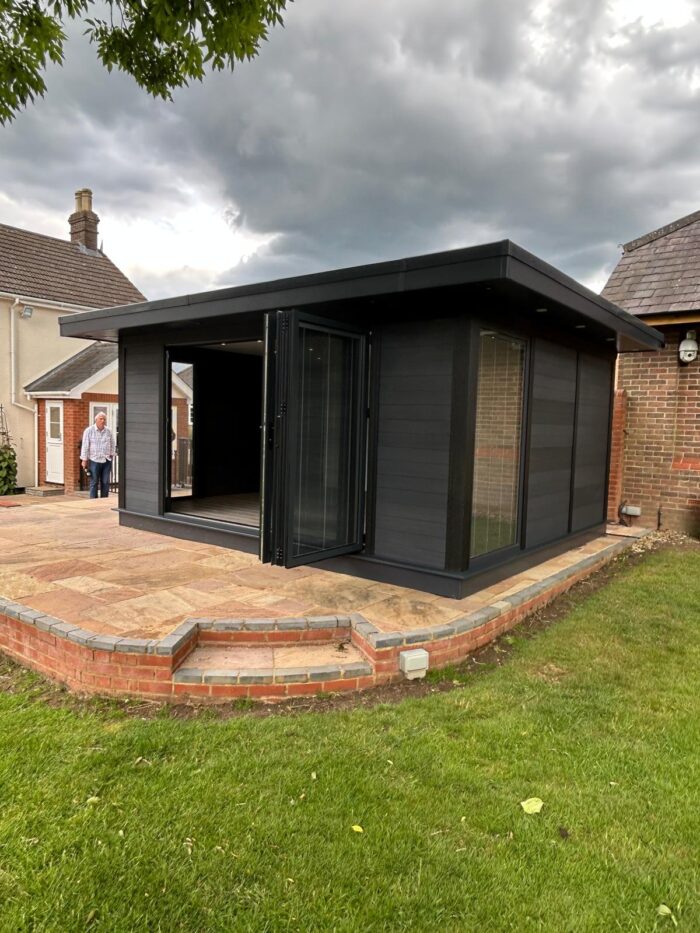
You stop condensation in a garden room by combining three things, good insulation, adequate ventilation, and controlled heating, so that warm moist air is never left to meet a cold surface. Condensation forms when humid air touches something colder than its dew point, so the fix is to keep surfaces warm, let moisture escape, and avoid pumping unnecessary humidity into the room in the first place. In a well-built, fully insulated composite garden room this is largely designed out from the start, which is why condensation is far more common in thin-walled sheds and summer houses than in a proper year-round building.
The reassuring part is that a garden room built to a proper specification rarely suffers the streaming windows and damp corners people worry about. From working with clients across a range of uses, we’ve found that when condensation does appear, it almost always traces back to one of a small number of causes, and each has a straightforward remedy. Understanding why it happens makes it easy to prevent, so it is worth a moment on the cause before the cure.
Why condensation happens
Air holds moisture, and warm air holds more of it than cold air. When that warmer, moisture-laden air meets a colder surface, such as a single-glazed window on a frosty morning or a poorly insulated wall, it cools, can no longer hold the moisture, and releases it as water on the surface. That is condensation, and everyday activities make it worse by adding moisture to the air, from a kettle to a workout to simply breathing in a small sealed space.
So there are only ever three levers to pull. Keep surfaces warm enough that they do not drop below the dew point, which is an insulation and heating question. Remove humid air before it condenses, which is a ventilation question. And add less moisture where you reasonably can, which is a usage question. A good garden room addresses the first two by design and leaves you only the third to manage.
Insulation, the first line of defence
The single biggest factor is keeping internal surfaces warm, and that is what insulation does. Our rooms are built with fully insulated walls, an EPDM rubber-coated 100mm insulated roof and a Styrofloor insulated floor, so the internal faces of the building stay much closer to room temperature rather than tracking the cold outside. A warm surface does not reach the dew point, so moisture has nothing cold to condense on.
This is exactly where a composite garden room pulls decisively ahead of a summer house or shed. A thin timber cabin with single glazing has cold internal surfaces for much of the year, which is precisely the condition condensation needs. An insulated building removes that condition across the walls, roof and floor together, which is why it matters that all three are insulated rather than just one.
Glazing, the surface to watch
Even in a well-insulated room, the glazing is usually the coldest surface, so it is the first place condensation tends to show. Our rooms come with double-glazed PVCu windows and doors as standard, which keeps the internal pane far warmer than single glazing and dramatically reduces the chance of misting. You will notice the difference most on cold mornings, when a single-glazed window would run with water and a double-glazed one stays clear.
If a room is used in a way that generates a lot of moisture, that is worth mentioning at the design stage so the glazing and ventilation can be specified accordingly, rather than discovering the issue later.
Ventilation, letting moisture escape
Insulation keeps surfaces warm, but you still need somewhere for humid air to go, otherwise moisture simply builds up in a sealed room. Ventilation does not have to mean losing heat. Trickle vents on windows allow a small, constant air exchange that carries moisture out without a noticeable draught. Opening a window for a short while after a moisture-heavy activity clears humid air quickly. And for rooms used hard, mechanical options such as an extractor or an air conditioning unit actively manage humidity.
In our experience, gentle continuous ventilation through trickle vents works better than occasionally flinging a window wide open because it removes moisture steadily before it ever has a chance to build up and condense, whereas relying on the occasional airing lets humidity accumulate in between and gives condensation a window of opportunity. The steady approach also keeps the room more comfortable, since you are not swinging between stuffy and freezing.
Heating without making it worse
Heating helps by keeping both the air and the surfaces warm, but the type of heat matters. Dry electric heat, from panel heaters, infrared or an air conditioning unit on its heat setting, warms the room without adding moisture. Steady background warmth is more effective against condensation than short intense bursts, because it keeps surfaces consistently above the dew point rather than letting them cool between sessions.
Avoid any heater that burns fuel, such as gas or paraffin, in a garden room. Beyond the safety concerns in a small sealed space, combustion releases water vapour as it burns, which adds the very moisture you are trying to remove. It is a genuinely counterproductive choice.
Managing the moisture you add
The final lever is usage, and small habits help. Drying wet coats or laundry in the room adds significant moisture, so avoid it where you can. If you have a lot of plants, they release moisture too. In a garden gym, sweat and heavy breathing add humidity fast, which is why ventilation or air conditioning matters more there. And in a garden office or insulated garden room, even a kettle contributes over a day, so a little airing goes a long way.
None of this means living carefully around the room. It simply means being aware that moisture has to come from somewhere, and in a small space the everyday sources add up faster than they would in the house.
Why the building specification matters most
You can manage condensation in almost any room with enough effort, but the point of a well-built garden room is that you should barely have to. When the walls, roof, floor and glazing are all insulated and the room has sensible ventilation designed in, the conditions condensation needs simply are not present for most of the year. That is the difference between a proper year-round building and a cabin that fights the seasons.
Our rooms sit on a no-dig base that raises the floor clear of the ground rather than casting it into a cold slab, are built for genuine all-year use, and need no painting, staining or sealing to keep performing. We back them with a guarantee, and the same insulated, well-ventilated build quality that keeps a room warm is exactly what keeps condensation away.
Talk to us about a dry, comfortable room
If you want a garden room that stays comfortable and condensation-free through a British winter, the specification is what does the work, so it is worth getting right from the start. You can explore our full range, request a callback at a time that suits you, or call us on 07816 898512.
You can also see finished rooms and build videos on our Facebook page and YouTube channel.