 Gable Roofed
 School Classroom
 Golf Room
 Snooker Room
 Home Office
 Home Gym
 Garden Annex
 Garden Studio
 Cinema Room
 Cocktail Bar
 Indoor Pool
 Beautician's Studio
 Café Area
Are garden rooms covered by home insurance?
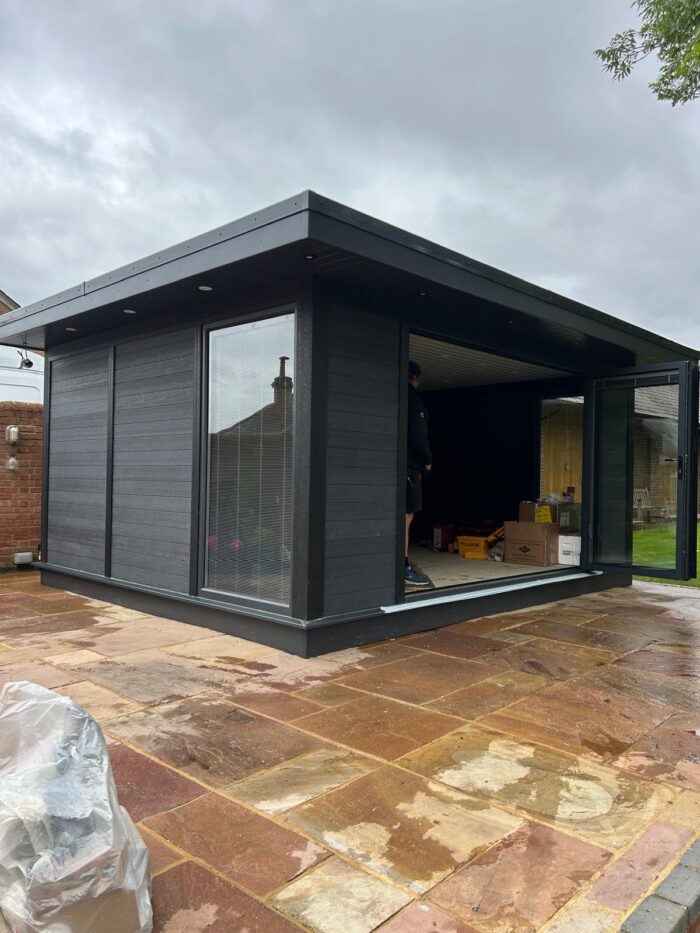
Garden rooms can be covered by home insurance, but it is not automatic, and this is the important part to understand. A permanent, well-built garden room is often covered under the buildings section of a home insurance policy, and the things inside it may be covered under contents insurance, but cover varies significantly between policies, and in almost all cases you need to tell your insurer about the building for that cover to apply. Adding a garden room without informing your insurer is the most common way people find themselves unexpectedly uncovered.
So the honest answer is that it depends on your specific policy and on whether you have declared the building, rather than on garden rooms in general. From working with clients across Hertfordshire, we’ve found this catches people out more than almost anything else, because they assume a structure in their own garden is automatically covered by the policy on their house. It often can be, but only once the insurer knows it exists and has adjusted the policy accordingly. This article explains how the cover generally works so you know the right questions to ask, though your own insurer will always have the final say.
Buildings insurance and the structure itself
Home insurance usually has two parts, buildings insurance for the structure of your property, and contents insurance for the things inside it. A garden room, being a permanent structure, most naturally falls under the buildings side.
Many buildings policies do include outbuildings and garden structures, but the detail matters. Some policies cover them as standard, some require them to be specifically listed, and some apply a maximum value or particular conditions. A permanent garden room fixed to a proper base is generally viewed differently from a moveable shed, which works in your favour, since insurers tend to treat a solid, permanent structure as a more legitimate part of the property than a temporary one.
The key practical point is that adding a garden room increases the rebuild cost of your property, which is the figure buildings insurance is based on. If you do not update that figure, you risk being underinsured across the whole policy, not just the garden room, so it is genuinely worth getting right.
Why you must tell your insurer
This is the single most important thing in this article. Home insurance works on the basis that you have disclosed material facts, and a new permanent building in your garden is a material fact. If you add a garden room and do not inform your insurer, you risk a claim being reduced or refused, and potentially the policy being affected more widely.
In our experience, declaring the garden room to your insurer before or during the build works better than trying to add it to the policy afterwards, because it removes any gap in cover during construction and any later dispute about whether the structure was properly disclosed, whereas leaving it until something goes wrong is exactly when disclosure problems surface. A short phone call or online update when you commit to the build is far easier than an argument at claim time. It may change your premium, but that is a small and predictable cost compared with discovering you are not covered.
Contents inside the garden room
What you keep inside is a separate question from the structure. Contents insurance may cover items in a garden room, but cover for contents in outbuildings is frequently limited, often with a lower maximum than for contents inside the house, and sometimes subject to specific security requirements. This matters a great deal depending on how you use the room.
A garden office full of computers and equipment, a home gym with valuable kit, a studio with instruments, or a room housing something like a golf simulator can hold a surprising amount of value. If that value exceeds your policy’s outbuilding contents limit, you may need to increase the limit or specify high-value items individually. It is worth adding up what will actually live in the room and checking that figure against your policy rather than assuming it is covered.
Security affects your cover
Insurers care about how secure a building is, and a garden room is no exception, particularly one containing valuable contents. Good quality locks on doors and windows, and in some cases an alarm or security lighting, may be expected or even required for cover on higher-value contents. Sensible security is worth having regardless, but it can also be a condition of a claim being paid.
The build quality of the room plays into this too. A composite garden room with solid construction, double-glazed PVCu windows and doors and proper locking is a more secure proposition than a flimsy timber cabin, and a secure, permanent building is generally more straightforward to insure than a lightweight structure an insurer may view as an easy target. We build with security in mind as standard, which is one less thing to negotiate with an insurer.
Business use changes things
If you run a business from your garden office, or see clients there, standard home insurance may not fully cover you. Business equipment, business stock, and public liability for visitors can fall outside a domestic policy, so you may need business cover or an extension to your existing policy.
This is easy to overlook when a garden office feels like part of the home, but from an insurer’s point of view, working from home and running a business from home can be treated differently. If your use goes beyond occasional remote working, it is worth raising specifically when you speak to your insurer.
The build quality and permanence help
One reason a properly built garden room is more straightforward to insure is that it reads as a genuine, permanent part of the property. Ours are built on a solid no-dig base, fully insulated, and finished to a standard that lasts, and we back them with a guarantee. A permanent, well-maintained structure is easier to value for rebuild purposes and less likely to raise the concerns an insurer might have about a temporary or deteriorating building. The same considerations apply to garden rooms in St Albans as anywhere else.
What to check with your insurer
When you speak to your insurer, a few questions will tell you where you stand. Ask whether the garden room is covered under your buildings insurance and whether it needs to be specifically listed. Ask what the rebuild figure should become once the room is added. Ask what the contents limit is for items kept in outbuildings, and whether high-value items need specifying. Ask what security is expected. And if you will work from the room, ask whether your intended use is covered or whether you need business cover.
For general, independent information on how home insurance works, the Association of British Insurers is a useful neutral starting point at abi.org.uk, though only your own insurer can confirm what your specific policy covers. Treat this article as a guide to the right questions, not as a substitute for that conversation.
Talk to us about your garden room
We cannot advise on your insurance, but we can build you a secure, permanent, well-documented garden room that is straightforward to insure and to value, and we are happy to provide the specification details your insurer may ask for. You can explore our full range, request a callback at a time that suits you, or call us on 07816 898512.
You can also see finished rooms and build videos on our Facebook page and YouTube channel.